
Degenerative conditions, such as osteoarthritis, degenerative disc disease and age-related loss of strength and balance, change slowly over time. You can’t always stop them, but the right care can help you stay strong, steady and independent for longer.
How these conditions affect the way you walk
Joint pain, stiffness and weaker muscles can shorten your steps, change your posture and make you less steady on your feet. Over time, this raises the risk of falls, which is one of the main reasons people lose their independence.
How we do gait training
- Assessment: Our physical therapy team looks at how you walk, your balance, strength, flexibility and any pain that holds you back.
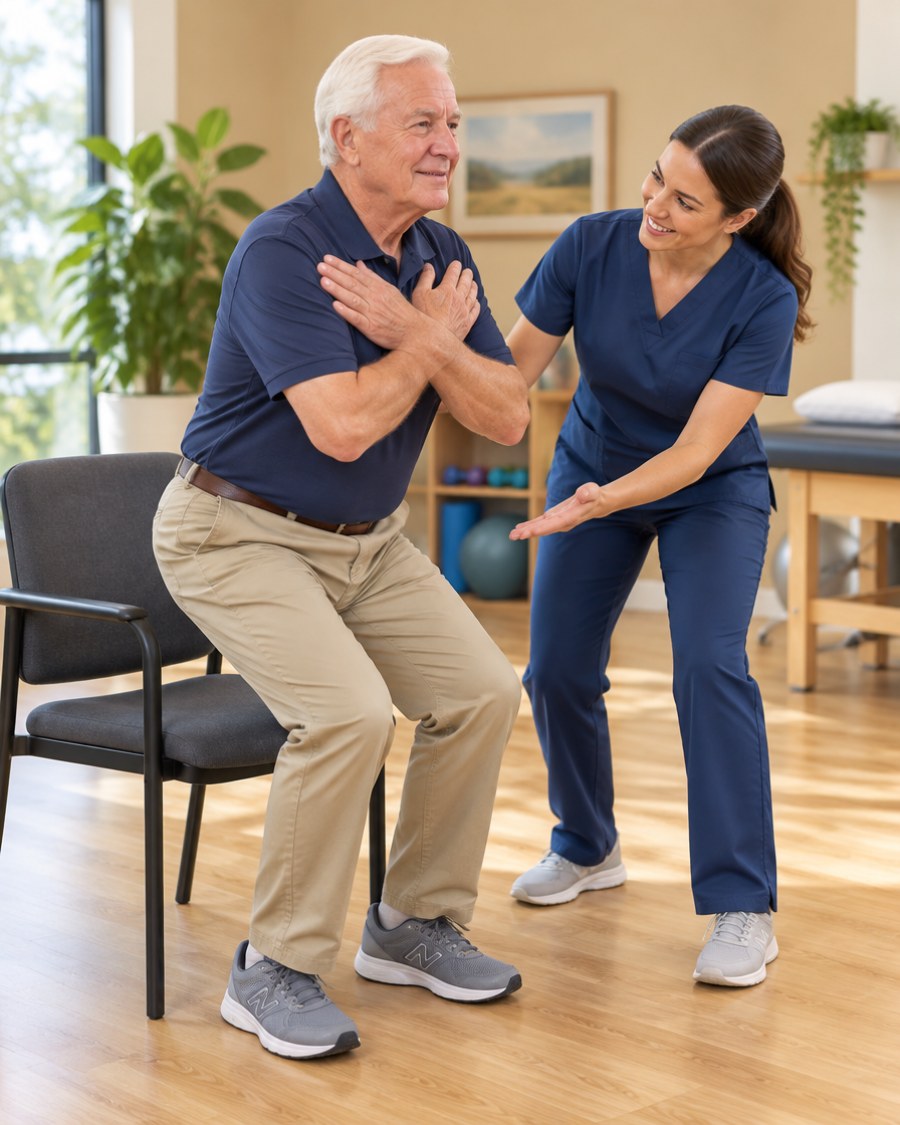
- Strength and flexibility: Targeted exercises for the hips, knees, ankles and core support every step you take.
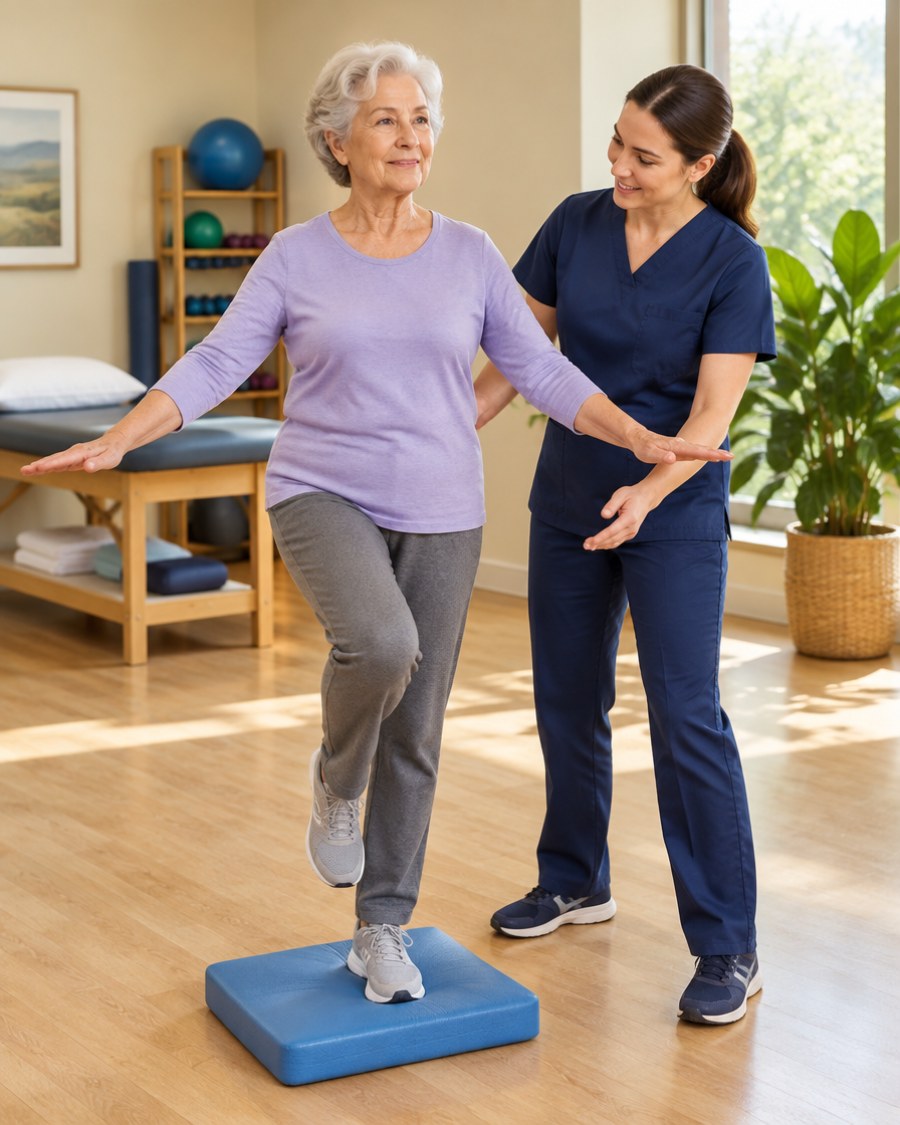
- Balance training: Safe, progressive drills help you react better and feel more confident on your feet.
- Walking practice: We work on step length, posture and rhythm, using support such as parallel bars or a gait belt when needed.
- Assistive devices: If a cane or walker can help, we choose the right one and teach you how to use it.
- Home program: You leave with simple exercises to keep your progress going between visits.

Things you can do to avoid getting worse
- Keep moving every day. Gentle activity, like walking, keeps joints flexible and muscles working.
- Strengthen 2 to 3 times a week. Strong legs and core protect your joints and your balance.
- Practice balance. Stand on one foot while holding a counter, or walk heel to toe along a hallway.
- Make your home safer. Remove loose rugs, add night lights and use grab bars in the bathroom.
- Wear supportive shoes. Choose closed shoes with good grip, and avoid walking in socks or loose slippers.
- Maintain a healthy weight. Less weight on your knees and hips means less stress on the joints.
- Get regular checkups. Check your vision and review your medications, as both can affect balance.
- Don’t ignore changes. New pain, stiffness or a near fall are signs to get checked early.
These tips are general information and do not replace a personalized evaluation. If you feel dizzy, have sudden weakness or fall, contact a healthcare professional.